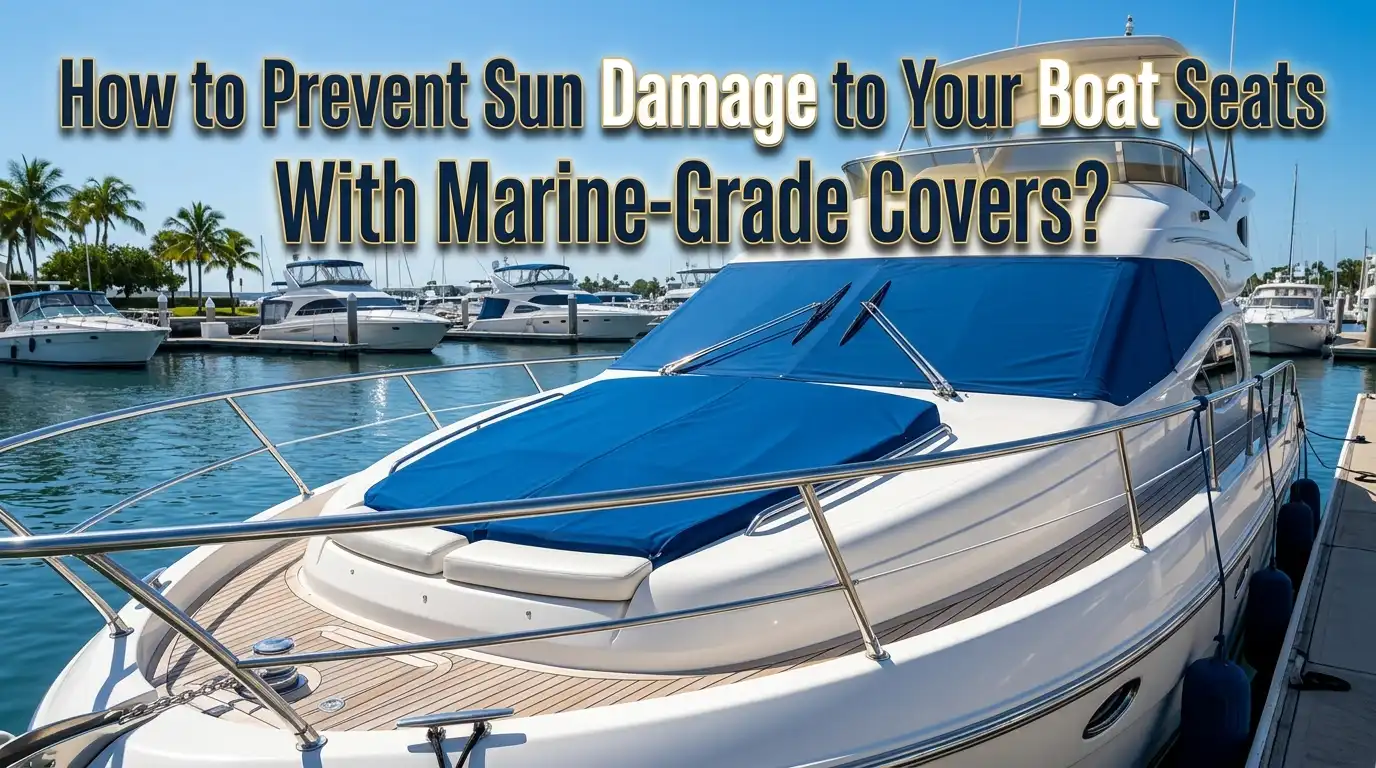
How to Prevent Sun Damage to Your Boat Seats With Marine Grade Covers?
The sun feels great on the water. Your boat seats do not agree. Every hour of bright sunshine slowly cooks the vinyl, fades the color, and dries out the material until it cracks. You spend good money on a boat, and then you watch the seats turn stiff and ugly far too soon.
Here is the good news. You can stop most of this damage. Marine grade covers act like sunscreen for your boat. They block harmful rays, hold in moisture, and keep your seats soft and bright for years.
This guide shows you exactly how to do it, step by step, with real solutions you can use today. Let us protect your investment together.
In a Nutshell
Short on time? Here are the main points you need to know before you read the full guide.
- UV light is the real enemy. Sunlight dries out the oils inside marine vinyl, which causes fading, cracking, and stiffness over time. Heat speeds up the damage.
- Marine grade covers are your best defense. A quality cover blocks UV rays and shields your seats when the boat sits idle, which is most of the time.
- Material choice matters most. Solution dyed acrylic like Sunbrella resists fading and breathes well, while coated polyester blocks water better but traps heat.
- Fit and breathability prevent new problems. A loose cover lets sun and dust in, while a sealed cover traps moisture and grows mold. You need both a snug fit and airflow.
- Covers work better with conditioner. Clean and treat your vinyl with a UV protectant first, then cover it. This two step routine doubles your protection.
- Care keeps covers working. Clean your cover, dry it before storage, and check for tears so it keeps doing its job season after season.
Why Sun Damage Happens to Boat Seats
Boat seats use marine vinyl for a reason. Vinyl resists water, salt, and stains. But vinyl has a weakness, and that weakness is the sun. Understanding this helps you fight back.
Marine vinyl contains oils and conditioners built into the material. These oils keep the vinyl soft and flexible. When UV light hits the surface day after day, those oils slowly evaporate. The vinyl dries out from the inside.
Heat makes the problem worse. On a hot day, dark seats can reach temperatures well above the air around them. This heat speeds up the drying process. The combination of UV and heat is what destroys seats fastest.
Once the oils leave, the trouble begins. The color fades first. Bright white turns dull, and deep colors look washed out. Then the surface gets stiff and hard. Finally, cracks appear. Once vinyl cracks, water seeps inside the foam, and that leads to mold, bad smells, and full seat replacement.
The frustrating part is that marine vinyl already comes with UV treatment from the factory. This treatment helps, but it does not last forever. Years of strong sun wear it down. That is why extra protection from a cover makes such a big difference. You are simply adding a second shield over the first one.
How Marine Grade Covers Stop Sun Damage
A marine grade cover works on a simple idea. If the sun cannot reach your seats, it cannot damage them. The cover acts as a physical barrier between the harmful rays and your vinyl.
Think of it like sunscreen for your boat. The cover blocks most UV light before it ever touches the surface. This keeps the protective oils inside the vinyl where they belong. Your seats stay soft, flexible, and bright.
Covers also block other threats. They stop rain, dust, bird droppings, tree sap, and pollen. All of these stain and weaken vinyl over time. A good cover handles every one of them at once.
Here is the key fact most owners forget. Your boat spends far more time parked than on the water. The seats sit exposed in a driveway, marina, or storage lot for days or weeks between trips. That idle time is when most sun damage builds up. A cover protects your seats during exactly these long stretches.
Marine grade means the cover is built for harsh outdoor life. Regular fabric falls apart fast in salt, sun, and wind. Marine grade fabric resists UV, water, and mildew. It holds up season after season. This durability is what separates a real boat cover from a cheap tarp that tears in one summer.
Choosing the Right Cover Material for UV Protection
The material decides how well your cover performs. Not all fabrics block the sun equally. Picking the right one is the most important choice you will make.
Solution dyed acrylic is the top choice for UV resistance. Sunbrella is the best known brand here. The color goes all the way through each fiber, so it resists fading for many years. This fabric also breathes, which lets moisture escape and prevents mold. The downside is that it is not fully waterproof on its own, and it costs more.
Coated polyester is the strongest waterproof option. Brands like top gun fabric block water almost completely and handle UV well. Polyester is also stronger and more abrasion resistant than acrylic. The trade off is breathability. Coated polyester traps heat and moisture underneath, which can cause condensation if you seal it too tight.
There is also marine grade vinyl coated fabric. It is fully waterproof and very tough. But it is heavy, stiff, and does not breathe, so it suits covers used in wet climates more than hot sunny ones.
Pros of acrylic: great UV resistance, breathable, long fade free life. Cons of acrylic: higher price, not fully waterproof. Pros of coated polyester: waterproof, strong, lower cost. Cons of coated polyester: traps heat, less breathable, can hold condensation. Match the fabric to your climate. Hot and sunny favors acrylic. Wet and rainy favors a coated option with vents.
Full Boat Covers Versus Individual Seat Covers
You have two main paths to cover your seats. You can use one large cover over the whole boat, or smaller covers on each seat. Both work, and each fits a different need.
A full boat cover protects everything at once. It shields seats, the console, the floor, and all your gear under a single sheet. This is the best choice for storage, towing, and long periods without use. One cover does all the work.
Individual seat covers fit over each chair or bench. They slip on quickly and come off in seconds. These work well for short term shade during a lunch stop or while the boat sits at the dock for a day. Many people use neoprene slip on covers for this job.
Pros of full covers: total protection, blocks rain and dust, good for storage and trailering. Cons of full covers: heavier, slower to put on, can trap moisture if sealed tight without vents.
Pros of seat covers: fast and easy, light, cheap, great for daily quick shade. Cons of seat covers: they only cover the seats, leave the rest exposed, and can blow off in wind if not secured.
The smart move is to use both. Use individual covers for quick daily shade and a full cover for storage. This combination gives you flexibility and full protection at every stage. You spend a little more, but your seats get the best defense possible all year long.
How to Measure Your Boat for a Proper Fit
A cover only works if it fits right. A loose cover lets sun and water sneak in, and a tight cover rips at the seams. Good measurements solve both problems.
Start with the center line length. Run your tape measure in a straight flat line from the very tip of the bow to the farthest point at the stern. Do not follow the curve of the hull. Keep the tape straight and level for an honest number.
Next, measure the beam, which is the width. Place the tape across the boat at its widest point, side to side. Again, keep it straight, not at an angle. This width number matters as much as the length.
Measure the height of anything tall. This includes windshields, rails, and seat backs. Tall items change how the cover drapes and where it needs extra room. Write down every measurement as you go.
For seat covers, measure each seat by itself. Note the width, depth, and height of the cushion. Many slip on covers list a size range, so match your numbers to that range.
A custom cover gives the tightest fit but costs the most. A semi custom cover leaves a few inches of leeway and costs less. Universal covers are cheapest but fit loosely. For sun protection, a snug fit is best, since gaps let rays reach your seats. Double check your numbers before you buy anything.
Step by Step Guide to Applying a Boat Cover Correctly
Putting on a cover the right way takes only a few minutes. Do it correctly and it protects fully and lasts longer. Here is the simple routine.
First, clean and dry the seats. Never cover wet or dirty seats, since trapped moisture grows mold fast. Wipe everything down and let it dry in the sun for a bit.
Second, lower or remove anything tall if you can. Fold down seat backs and tuck away loose gear. This helps the cover sit flat and reduces stress points where fabric rubs.
Third, unfold the cover and find the front. Most covers mark the bow end. Drape the cover from front to back so it lays evenly over the whole boat. Pull it down on both sides at the same time.
Fourth, secure it. Tighten the straps, draw cords, or buckles until the cover sits snug. A snug cover sheds water and resists wind. A loose cover flaps, lets in sun, and wears out fast.
Fifth, add support poles if your cover came with them. A center pole lifts the fabric so rain runs off instead of pooling. Standing water stretches and damages covers over time.
Last, check the fit one more time. Walk around the boat and look for gaps. Smooth out any wrinkles and confirm every strap is tight. This final check takes thirty seconds and saves your seats from sneaky sun exposure.
Preventing Mold and Mildew Under Your Cover
Covers solve sun damage, but they can create a new problem if you are careless. A sealed cover traps moisture, and trapped moisture grows mold. Mold stains vinyl, smells bad, and even harms your health. You must manage airflow.
The biggest rule is simple. Never cover wet seats or a wet boat. Water under a tight cover has nowhere to go. It sits, warms up, and feeds mold spores. Always dry everything first.
Choose a breathable cover when you can. Solution dyed acrylic lets damp air escape while still blocking the sun. This balance is why many owners prefer it for long term storage in humid areas.
Use moisture absorbers under the cover. Products like moisture grabbing canisters pull dampness out of the trapped air. Place a couple under the cover and replace them as they fill. This trick works wonders in storage.
Lift your seat cushions if they come off. Raising them lets air flow around all sides instead of sealing moisture against the base. Better airflow means less mold.
Finally, check under the cover now and then. On a dry sunny day, pull the cover back and let everything air out for an hour. This simple habit catches dampness early before mold takes hold. A little attention here keeps your protected seats clean and fresh.
Combining Covers With UV Protectant Sprays
Covers do a great job, but you can do even better. Pairing a cover with a UV protectant spray gives your seats two layers of defense. This combination is what the pros use.
A UV protectant replaces the oils that sunlight steals. You spray it on, let it soak in, and wipe off the excess. The product coats the vinyl and reflects some UV rays. It also keeps the surface soft and flexible.
Many boaters trust spray protectants made for vinyl and rubber. A common method is to spray an even coat, let it sit for twenty to thirty minutes, then wipe away the leftover. This leaves a clean protective finish without a greasy feel.
Apply protectant before you put the cover on. The cover then blocks the sun, while the spray protects the surface during the times the cover is off. Together they cover every gap in your defense.
Pros of adding protectant: restores lost oils, keeps vinyl soft, adds a UV layer, slows fading. Cons: it needs regular reapplication, some products feel slippery, and cheap ones can dry out vinyl instead of helping.
Avoid products with harsh solvents or heavy silicone. Some household polishes look shiny at first but pull oils out over time. Stick with sprays made for marine vinyl. Reapply every few weeks during heavy sun season. This small step makes your cover work even harder.
Cleaning Your Seats Before Covering Them
Covering dirty seats locks in damage. Dirt, salt, and grime trapped under a cover grind into the vinyl and feed mold. A quick cleaning routine before covering keeps everything fresh.
Start with a gentle wash. Mix mild soap with warm water and wipe the seats with a soft cloth or sponge. Avoid harsh cleaners and stiff brushes, since they scratch and dry out vinyl.
Pay attention to seams and corners. Dirt hides in stitching and folds where mold loves to start. Clean these spots carefully so nothing gets sealed in under the cover.
Rinse off all the soap. Leftover soap attracts dirt and can leave a film that breaks down the surface. Use clean water and a fresh cloth to remove every trace.
Dry the seats fully before the next step. This is the most important part. Let the sun and air dry them completely, or wipe them down with a dry towel. Damp seats under a cover are a recipe for mold.
After cleaning and drying, apply your UV protectant. Then put on the cover. This order matters: clean, dry, protect, then cover. Each step builds on the last.
Make this a routine. A light cleaning every couple of weeks during boating season is enough. Regular care beats deep scrubbing once a year. Clean seats last longer, look better, and respond well to the protection your cover provides.
Caring for Your Marine Cover So It Lasts
Your cover protects your seats, so you should protect your cover. A worn out cover with holes lets sun and water through and fails at its only job. A little care keeps it strong for years.
Clean the cover a few times each season. Brush off loose dirt, then wash with mild soap and water. Skip harsh chemicals and pressure washers, since they strip the protective coating off the fabric.
Always dry the cover before you fold and store it. A damp cover grows mildew that stains and weakens the fibers. Hang it in the sun until it is bone dry, then put it away.
Check for damage often. Look for small tears, loose seams, and worn straps. Fix small problems early before they grow. A tiny rip becomes a big hole after one windy storm.
Reapply a fabric water repellent when water stops beading on the surface. Over time the factory coating wears off, especially on acrylic covers. A fresh treatment brings back the water resistance and UV protection.
Pros of good cover care: longer cover life, better protection, saves money on replacements. Cons: it takes time and a little effort each season. The trade is worth it. A well cared for cover can last many years, while a neglected one fails in one or two. Store it in a dry spot away from rodents and sharp objects when the season ends.
Smart Storage and Shade Options Beyond Covers
Covers are the main solution, but a few extra habits add even more protection. Where and how you store your boat changes how much sun your seats face. Smart choices here reduce your workload.
Park in the shade whenever you can. A tree, a carport, or the shady side of a building blocks hours of direct sun. Less sun on the boat means less work for your cover and longer seat life.
Indoor storage is the gold standard. A garage or storage unit keeps your boat out of the sun completely. If you have access to covered storage, your seats will thank you with years of soft bright vinyl.
Use a bimini top while on the water. This shade canopy covers the helm and seats during use, when a full cover is off. It protects you from sunburn and your seats from UV at the same time.
Reposition the boat in your driveway through the season. The sun moves, and a spot that is shady in spring may bake in summer. A small adjustment keeps seats out of the harshest light.
Pros of shade storage: less UV exposure, less cover wear, lower seat temperatures. Cons: indoor storage costs money, and not everyone has shade available. Combine these habits with your cover for the best results. Shade plus a cover plus protectant equals seats that stay new looking far longer than the seats of a boat left baking in the open.
Common Mistakes That Still Lead to Sun Damage
Even careful owners make small mistakes that let the sun win. Knowing these traps helps you avoid them. Here are the most common ones.
The first mistake is covering wet seats. Moisture under a cover causes mold, which damages vinyl as badly as the sun. Always dry the seats and the cover before sealing things up.
The second mistake is using a loose or universal cover with big gaps. Sunlight slips through openings and hits the seats anyway. A snug fit closes these gaps and blocks the rays.
The third mistake is skipping the cover for short trips. Owners think a day at the dock does no harm, but daily exposure adds up fast. Use a quick seat cover even for short stops.
The fourth mistake is using the wrong cleaning products. Harsh household cleaners and the wrong sprays strip oils and dry out vinyl. Stick with products made for marine use.
The fifth mistake is forgetting to reapply UV protectant. One coat in spring wears off by midsummer. Reapply every few weeks during heavy sun.
The last mistake is neglecting the cover itself. A torn cover protects nothing. Check it often and repair it fast. Avoid these six errors and your protection plan will actually work. Most sun damage that happens to covered boats traces back to one of these simple slips.
Frequently Asked Questions
How long do marine grade boat seats last with a cover?
With a quality cover, UV protectant, and regular cleaning, marine vinyl seats can stay soft and bright for ten years or more. Without protection, seats often fade and crack within three to five years of heavy sun. The cover is the single biggest factor in how long your seats last.
Can I leave my boat cover on all the time?
Yes, you can, but you must manage moisture. A cover left on for long periods needs breathable fabric and good airflow to prevent mold. Use moisture absorbers and air the boat out on dry days. Never seal a wet boat under a tight cover for weeks at a time.
Do clear or light colored covers protect better than dark ones?
Light colored covers reflect more heat and stay cooler underneath. Dark covers absorb heat, which can raise the temperature on your seats. For sun protection, a light colored solution dyed acrylic cover is a strong choice. The UV blocking quality of the fabric matters more than color alone, though.
Are individual seat covers enough on their own?
Individual covers protect the seats they cover, but they leave the rest of the boat exposed. They work great for quick daily shade at the dock. For storage and towing, a full cover protects everything better. Using both together gives you the most complete protection year round.
How often should I clean and condition my boat seats?
Clean your seats lightly every couple of weeks during boating season. Apply UV protectant every few weeks, more often in strong sun. Regular light care works better than one big scrub a year. This routine keeps the vinyl soft and helps your cover do its job.
Will a cheap tarp work instead of a marine cover?
A cheap tarp blocks some sun, but it causes problems. Tarps do not breathe, so they trap moisture and grow mold. They also tear quickly in wind and sun. A marine grade cover resists UV, breathes, and lasts for years. The extra cost pays off in saved seats and fewer replacements.

Luffy is the founder and lead writer at ProtectItFinds.com, where he helps readers find the best covers, cases, and protective solutions for their appliances, gadgets, and everyday products. With a passion for in-depth research and hands-on product testing, Luffy breaks down honest reviews and comparisons so you can protect what matters most — without the guesswork.