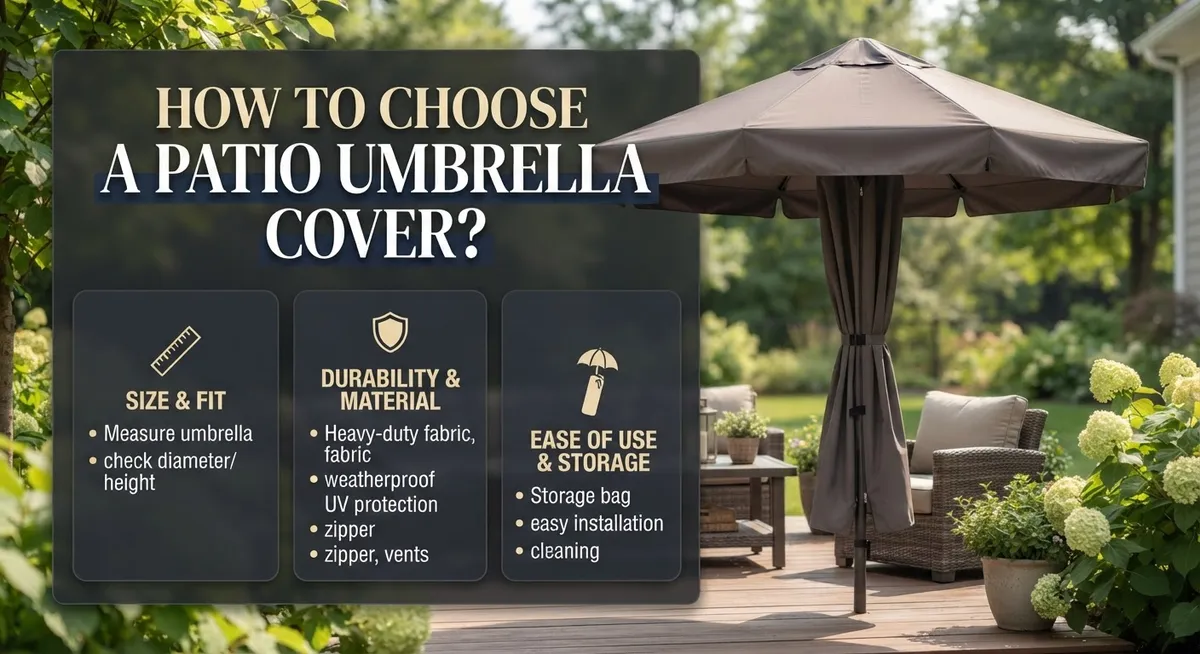
How to Choose a Patio Umbrella Cover?
Your patio umbrella works hard all year. It blocks sun, breaks wind, and adds style to your outdoor space. But without the right cover, it can wear out fast.
A good cover protects your umbrella from rain, dust, and harsh UV rays. It also keeps your patio looking neat when the umbrella is not in use. Choosing the wrong size or material can leave your umbrella exposed, even if it looks covered.
Many people grab any cover that seems close in size. This often leads to a loose fit or gaps that let moisture in. Over time, this damages the fabric and frame.
This guide will help you avoid that mistake. You will learn how to measure your umbrella correctly and apply the 2 foot rule for proper shade coverage. We will also cover key features like water resistance and UV protection.
By the end, you will know exactly what to look for. You will feel confident picking a cover that fits well and lasts long. Let us walk through the simple steps together.
In a Nutshell
Here’s a quick summary to help you choose the right cover fast.
-
Measure first: Check your umbrella’s rib count and arm length before buying anything. This gives you the exact size you need.
-
Follow the 2 foot rule: A good cover should extend two feet beyond your seating area on every side. This keeps everyone shaded properly.
-
Pick water-resistant materials: Your cover must handle rain and moisture without soaking through. This stops mold and damage underneath.
-
Choose UV resistant fabric: Sun rays weaken cheap materials fast. A strong UV resistant cover lasts much longer outside.
-
Aim for a snug fit: Loose covers flap around and let in dust or water. Tight covers wear out fast from strain. Snug is the sweet spot.
-
Maintain it regularly: Clean your cover often and check for wear. This simple habit keeps protection strong for years.
Remember these points and you will pick a cover that truly fits. Skip the guesswork and measure everything carefully first.
Why a Properly Fitted Cover Matters
A properly fitted cover makes all the difference in protecting your patio umbrella. When your cover fits snugly, it stays in place during wind and rain. Loose covers shift around and expose your umbrella to damage.
Water gets inside loose covers easily. Rain pools on sagging fabric and drips onto your umbrella’s canopy. Over time, trapped moisture causes mold and mildew to grow. A snug fit prevents these problems by keeping water from collecting in gaps.
UV rays damage umbrella fabric quickly. A cover that doesn’t fit properly leaves parts of your canopy exposed to the sun. This causes fading and weakens the material. A proper fit shields every inch of your umbrella from harmful rays.
Dust and debris find their way into poorly fitted covers. Wind carries dirt into gaps and openings. Leaves collect underneath loose fabric. Your umbrella stays cleaner and lasts longer when covered correctly.
A well-fitted cover also protects your umbrella’s frame and joints. Metal parts stay dry and rust-free. Wooden components don’t absorb moisture that causes swelling or cracking.
The investment in a properly fitted cover pays off. You avoid expensive repairs or early replacement of your umbrella. Your patio stays shaded for many seasons.
Most people underestimate how much fit matters. They think any cover close to the right size will work. In reality, even small gaps create big problems over months and years. Taking time to measure correctly and choose the right size protects your investment and extends your umbrella’s life significantly.
Understanding Key Materials: Water-Resistance and UV Protection
Water resistance and UV protection work together as your cover’s main defense system. These two properties stop the most common damage to outdoor umbrellas.
Water resistance keeps rain from soaking through the fabric. A cover without proper water resistance absorbs moisture like a sponge. Water then drips onto your umbrella’s canopy underneath. Over time, this moisture causes mold, mildew, and rust on metal parts. Your umbrella ages faster and loses its ability to provide shade.
Look for covers made from materials that naturally repel water. Polyester blends and acrylic fabrics offer solid water resistance. The fabric should shed water rather than soak it up. You can test this by pouring a small amount of water on a sample. If water beads up and rolls off, the material passes the test.
UV protection guards against sun damage. Ultraviolet rays break down fabric fibers and fade colors. A cover without UV resistance becomes brittle and cracks within one or two seasons. Quality covers include UV blocking technology woven into the material itself.
The best covers combine both properties in a single fabric layer. Some covers add a reflective coating on the outside to bounce heat away. This keeps the interior cooler and extends the cover’s lifespan.
Check the product description for specific UV rating information. Higher ratings mean stronger sun protection. Water resistance ratings tell you how much moisture the fabric can handle before leaking.
Materials matter more than price alone. A cheap cover might feel thick but lack real water resistance. An expensive cover without proper testing might disappoint you too. Focus on what the material actually does, not just its cost or appearance.
Step-by-Step: Measuring Your Outdoor Space
Measuring your outdoor space is the first step toward picking the right patio umbrella cover. You need accurate dimensions to ensure proper protection and fit.
Start by measuring the total area your umbrella shades. Use a tape measure to find the width and length of your seating zone. Write down these numbers clearly so you don’t forget them later.
Next, examine your umbrella itself. Count the number of ribs on your umbrella canopy. This rib count helps determine the cover size you need. Most umbrellas have between 6 and 12 ribs, but some have more.
Measure the length of one rib arm from the center pole to the edge. This measurement tells you the canopy’s actual diameter. Multiply this by two to get the full width across your umbrella. This is your umbrella’s key dimension.
Now apply the two foot rule to your seating area measurements. Your cover should extend two feet beyond your seating edges on all sides. This extra coverage prevents water from dripping onto furniture and keeps sun exposure minimal.
For example, if your seating area is 10 feet by 12 feet, add four feet total to each dimension. Your ideal cover should protect an area roughly 14 feet by 16 feet.
Document all these measurements on paper or your phone. Include the umbrella diameter, rib count, and arm length. Keep this information handy when evaluating different cover options.
Proper measurements prevent costly mistakes. A cover that seems close in size often fails to protect effectively. Take your time with measurements and you’ll find a cover that fits your space perfectly.
Counting Ribs and Measuring Rib Arm Length for Accurate Sizing
Counting your umbrella’s ribs is one of the simplest yet most important steps in finding the right cover. Each rib runs from the center pole outward to support the canopy fabric. Most patio umbrellas have between 6 and 12 ribs, though some larger models contain more.
To count your ribs accurately, stand under your closed umbrella and look upward. You’ll see distinct fabric panels running from top to bottom. Each panel sits between two ribs. Count every rib you see, then write this number down for reference.
Once you have your rib count, measure the rib arm length. This measurement tells you the canopy’s radius when fully extended. Start at the center of the umbrella pole and measure straight out to where the rib ends at the fabric edge.
Use a flexible measuring tape for the most accurate results. Extend it along the rib itself rather than measuring in a straight line through the air. Note this length in inches or centimeters.
This rib arm length directly determines what size cover you need. The cover must fit snugly around your canopy’s circumference. A cover that’s too small won’t stretch far enough. A cover that’s too large will sag and collect water.
Document both measurements clearly. Your rib count and rib arm length together give you the specific dimensions needed to select a cover that fits properly. These two simple measurements prevent ordering a cover that won’t work for your umbrella. Keep these numbers handy when shopping for your replacement cover.
Applying the 2-Foot Rule for Optimal Shade Coverage
The 2 foot rule is your guide for determining how much shade coverage you actually need. This rule states that your umbrella canopy should extend at least 2 feet beyond the edges of your seating area on all sides. Think of it as a protective buffer zone around where people sit.
Here’s why this matters. Direct sun exposure happens at angles throughout the day. When the sun moves, shadows shift. A canopy that barely covers your seating area leaves gaps where UV rays slip through. Those 2 extra feet ensure continuous shade as the sun’s position changes.
To apply this rule, start with your seating dimensions. Measure the length and width of your outdoor sitting space. Now add 4 feet to the length and 4 feet to the width. This accounts for 2 feet on each side. For example, a 10 by 12 foot seating area becomes 14 by 16 feet when you apply the rule.
Next, compare this expanded measurement to your umbrella’s canopy size. Umbrella sizes are typically listed by diameter or by rib arm length. A rib arm measurement of 8 feet creates roughly a 16 foot diameter canopy. This would cover your 14 by 16 foot area nicely.
Remember that this rule assumes your umbrella sits centered over your seating area. If your umbrella placement is off center, you may need a larger canopy. Wind also affects shade coverage. Strong winds tilt umbrellas, creating uneven shadows.
Write down your calculations before shopping for covers. This prevents buying covers that are too small. A properly sized cover protects an umbrella that provides real, effective shade all season long.
Tips for Ensuring a Snug, Secure Fit
A snug, secure fit keeps your umbrella cover from slipping, flapping in wind, or collecting water in pockets. Let’s walk through how to achieve this.
First, verify your umbrella dimensions match the cover size. Take your rib arm measurement and compare it to the cover’s stated canopy diameter. The numbers should align closely. A cover that’s too large will bunch up and create gaps where rain enters. A cover that’s too small won’t stretch over your umbrella properly.
Next, check how the cover attaches to your umbrella. Most covers use drawstrings, velcro straps, or elastic hems. Drawstrings work best for securing the fit around the pole. Pull them tight enough to hold the cover firmly but not so tight that you damage the fabric. Velcro straps should wrap snugly around the umbrella shaft without twisting.
Test the fit before bad weather arrives. Open your umbrella partially and slide the cover over it. The cover should sit evenly across all ribs with no sagging sections. If one side dips lower than others, your umbrella may not be centered or the cover may need adjustment.
For freestanding umbrellas, ensure the cover’s base fits securely around the pole. Some covers have reinforced bottoms that grip better. Check that ventilation holes align properly. These holes prevent air pockets that can catch wind and loosen the cover.
Store your umbrella with the cover loosely attached when not in use. This prevents the cover from stretching out over time. Before each season, inspect the attachment points for wear. Replace worn straps or drawstrings promptly to maintain that secure fit your umbrella needs.
Common Mistakes to Avoid When Choosing a Cover
Choosing a patio umbrella cover seems simple, but many people make mistakes that reduce protection and waste money. Understanding these errors helps you select the right cover the first time.
The biggest mistake is buying a cover without measuring your umbrella first. Many shoppers guess at size or rely on vague descriptions. This leads to covers that are too loose or too tight. A loose cover shifts during wind and allows water to pool inside. A tight cover stretches the material and can tear easily. Always measure before you buy.
Another common error is ignoring material quality. Some people choose covers based solely on price or appearance. They skip checking for water resistance and UV resistance. These properties matter because they determine how well your cover actually protects your umbrella. A cheap cover that lets water through defeats the entire purpose.
People also forget about maintenance after purchase. They assume a cover works forever without care. In reality, covers need regular cleaning and inspection. Dirt buildup traps moisture against your umbrella. Small tears get worse if left unrepaired. Regular maintenance keeps your cover effective for years.
Many buyers also overlook seasonal storage needs. They leave covers on umbrellas during off seasons without proper ventilation. This traps moisture and causes mold or mildew growth. Covers need airflow when your umbrella sits unused for months.
Finally, people often choose the wrong cover style for their umbrella type. Freestanding umbrellas need different covers than cantilever models. Patio table umbrellas require different fits than standalone umbrellas. Check your umbrella’s specific design before selecting a cover.
Avoiding these mistakes saves you money and ensures your umbrella stays protected through every season.
Maintenance Practices to Preserve Cover Performance
Regular maintenance keeps your cover performing at its best. Clean your cover every few months with mild soap and water. This removes dirt, pollen, and debris that can break down materials over time.
Dry your cover completely before storing it. Moisture trapped inside creates mold and mildew. Hang it in sunlight or use a soft cloth to wipe it dry. This simple step extends your cover’s lifespan significantly.
Inspect your cover for damage before each season. Look for tears, loose seams, or worn areas. Small holes grow larger without attention. Repair minor damage immediately with appropriate patching materials designed for outdoor fabrics.
Check the attachment points regularly. Straps, ties, and fasteners loosen from wind and weather exposure. Tighten them to keep your cover secure and prevent flapping. A loose cover won’t protect your umbrella effectively.
Store your cover properly during off seasons. Keep it in a clean, dry location away from direct sunlight. Extreme temperatures and UV exposure degrade materials even when not in use. A storage bag or breathable container works well for this purpose.
Remove your cover during heavy storms or high winds. Intense weather can strain attachment points and damage the fabric. Your umbrella itself can handle most conditions, so take the cover off when forecasts predict severe weather.
Avoid harsh chemicals and power washers. These damage protective coatings and weaken fabric fibers. Stick with gentle cleaning methods using basic household soap.
Check for water pooling after rain. Proper covers shed water, but debris sometimes collects in low spots. Clear these areas to prevent moisture buildup and material degradation.
Following these practices ensures your cover remains effective year after year, protecting your umbrella investment.
Final Thoughts
Choosing the right patio umbrella cover does not need to feel complicated. Focus on the basics, and you will make a smart choice every time.
Start with accurate measurements. Measure your umbrella’s ribs, arm length, and canopy size before you shop. This simple step prevents most fitting problems.
Remember the 2-foot rule when planning your outdoor space. Your canopy should extend two feet beyond your seating area on every side. This ensures proper shade coverage for everyone underneath.
Water resistance and UV protection matter just as much as size. A cover with these features shields your umbrella from rain, sun damage, and fading. Skip covers that lack these properties.
A snug fit protects your investment better than a loose one. Loose covers flap in wind and let water collect in pockets. Always test your cover’s fit before storms arrive.
Maintenance plays a big role in how long your cover lasts. Clean it regularly and let it dry fully before storage. Inspect it each season for tears or worn spots.
Avoid rushing your decision. Take time to measure, compare, and check materials before you buy. This patience pays off in better protection and fewer replacements.
Think about your climate too. If you live somewhere with strong sun or frequent rain, prioritize covers built for those conditions. Your local weather patterns should guide your final choice.
In the end, a good patio umbrella cover comes down to three things: correct size, quality material, and consistent care. Get these right, and your umbrella will stay protected for years.
Small efforts now save you money and hassle later. Choose wisely, measure carefully, and maintain your cover well. Your outdoor space will thank you.
Frequently Asked Questions
How do I know what size cover to buy?
Start by measuring your umbrella’s canopy diameter and rib arm length. These two measurements tell you the exact cover dimensions you need. Don’t guess or estimate based on appearance alone.
Also think about your outdoor space. Use the 2-foot rule: your umbrella canopy should extend 2 feet beyond seating area edges on all sides. This gives you proper shade coverage and protection.
What materials should I look for in a cover?
Focus on two key properties: water resistance and UV resistance. Water-resistant materials keep rain from seeping through and damaging your umbrella. UV-resistant fabrics protect the cover itself from sun fading and deterioration.
Quality materials last longer and protect better. They’re worth the investment since they defend your umbrella for multiple seasons.
Can I use any cover on my umbrella?
No. A snug fit is critical for effective protection. Loose covers shift in wind and don’t shield your umbrella properly. Oversized covers also trap moisture underneath, which causes mold and mildew.
Always match the cover size to your specific umbrella dimensions. This ensures maximum protection and performance.
How often should I maintain my cover?
Check your cover before each season starts. Look for tears, worn spots, or water pooling after rain. Dry the cover completely before storing it away.
Regular inspection catches problems early. Small maintenance habits prevent bigger damage later and extend your cover’s lifespan significantly.
Do I need a cover for every season?
Yes. Covers protect your umbrella year-round from rain, sun, dust, and debris. Remove your cover during heavy storms or high winds to prevent damage to the attachment points.
Store your cover loosely during off-season months. This prevents moisture buildup while keeping it ready for the next season.

Luffy is the founder and lead writer at ProtectItFinds.com, where he helps readers find the best covers, cases, and protective solutions for their appliances, gadgets, and everyday products. With a passion for in-depth research and hands-on product testing, Luffy breaks down honest reviews and comparisons so you can protect what matters most — without the guesswork.